
|
|
|
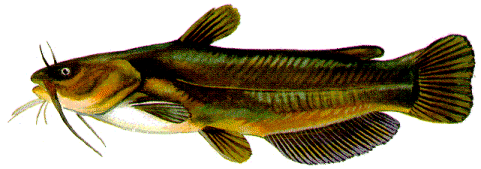
YELLOW BULLHEAD (Ameiurus natalis) |
 |
Common Names - butter cat, yellow cat, creek cat, white-whiskered bullhead, greaser, polliwog, chucklehead cat
Description - The yellow bullhead closely resembles the brown bullhead with a squat body and a round or square tail. It is yellow-olive to slate-black above and lighter, often yellow to yellow-olive, on its sides with little to no mottling. The belly may be white, cream or yellow. The chin barbels are yellow to buff or pale pink; the upper barbels, which are light to dark-brown, help distinguish this species from brown bullheads. The anal fin has a straight margin with 23 to 27 rays.
Subspecies - There are no known subspecies.
Range - Occurs nationwide.
Habitat - The habitat is variable and includes vegetated areas of clear, shallow lakes, reservoirs, ponds, and slow-flowing streams. They are more tolerant of polluted environments than most other members of the catfish family.
Spawning Habits - Spawning occurs in May and June as a rule, with eggs deposited in a nest usually adjacent to a submerged object. One or both parents take part in building the nest, and take turns caring for the eggs, which may number 2,000 to 4,000 and hatch in 5 to 10 days. The male guards the eggs and fry.
Feeding Habits - Though scavengers, yellow bullheads prefer to feed on minnows, snails, shrimp and crayfish. They also will feed on insect larvae, vegetation and decaying organic matter. Scent and taste play a vital role in their feeding, most of which is done at night.
Age and Growth - Little information is available on age and growth of this species. Generally, they average less than one pound but can grow up to three pounds.
Sporting Qualities - Easy to catch on cut bait, worms, crickets, doughballs and a wide variety of natural and prepared baits. They can be caught at any time of day, but bite best at night. They are not strong fighters.
Eating Quality - They are important as a food fish in some areas and are the dominant species in some waters. The creamy flesh is quite good when taken from clean water.
World Record - 4.25 pounds, caught in Mormon Lake, Arizona, in 1984.